Hi there, I’m Zukky.
In June 2025, I traveled to Amsterdam to visit the Rijksmuseum. My mission? To see the legendary works of Johannes Vermeer. While I managed to see three masterpieces, one—The Love Letter—was unfortunately away on loan.
I was heartbroken, but my wife was surprisingly calm. “It’s fine,” she said, “I already saw it at an exhibition in Japan.” Well, if she’s happy, I’m happy. I shall graciously forgive the museum this time. ( •´ω•` )ﻭ
Who exactly was Vermeer?
Johannes Vermeer (1632–1675) spent his entire 43-year life in Delft. Despite his current fame, he struggled financially and died in significant debt. Ironically, we only have detailed records of his life because his estate had to be meticulously inventoried for debt collection.
His works were scattered across the globe to pay off those debts, and he faded into obscurity for nearly 200 years before being “rediscovered.” Today, only about 37 of his paintings are known to exist. Seven remain in the Netherlands: four at the Rijksmuseum and three at the Mauritshuis in The Hague.
Let’s dive into the three I saw in Amsterdam.
1. The Milkmaid (ca. 1658–1660)
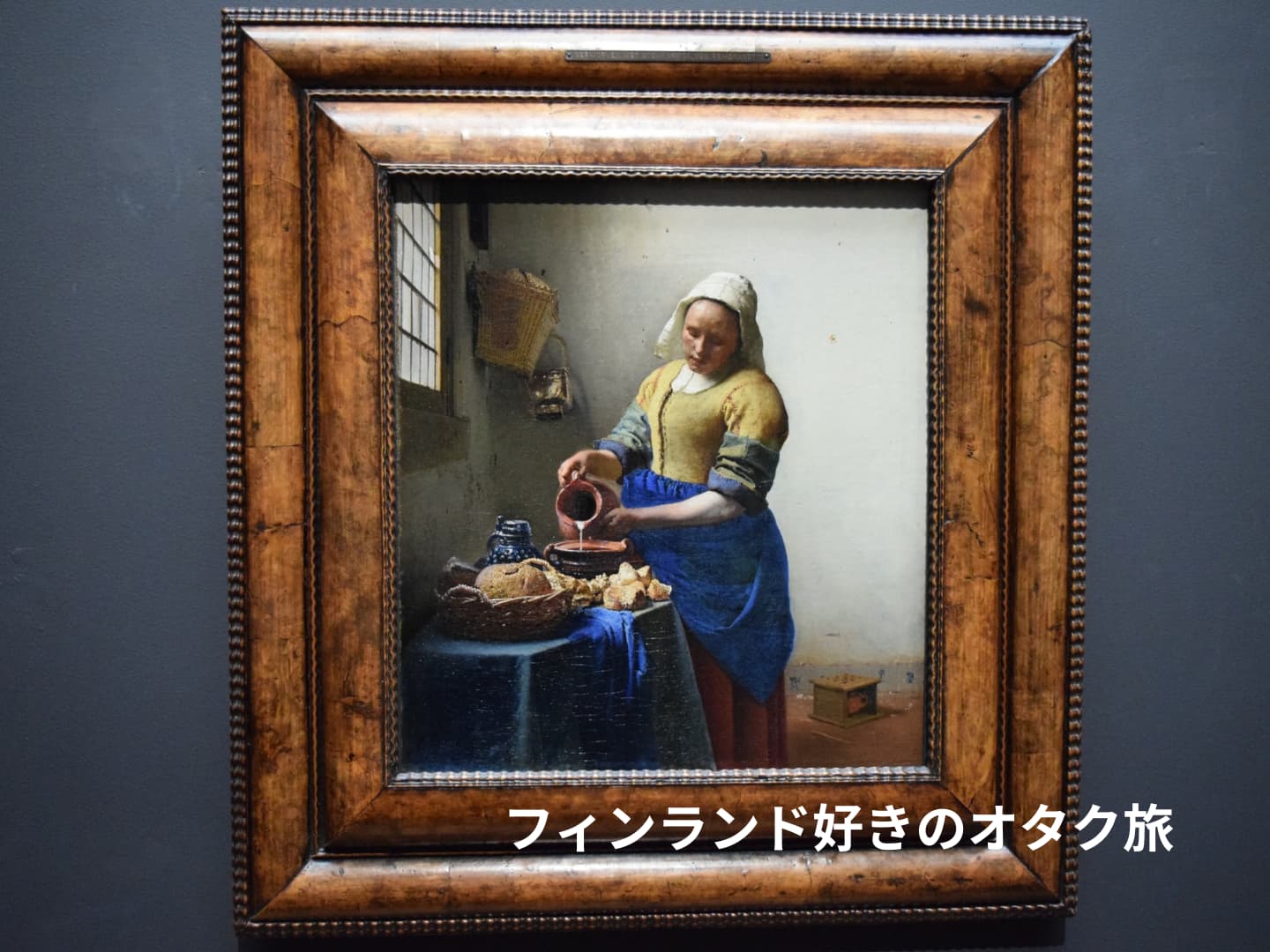
First off, let’s talk about the frame. It’s a simple, dark, two-tiered wooden structure that perfectly complements the softness of the painting. Admiring the frames is one of my secret joys when visiting European museums.
The canvas is smaller than you might expect, but the presence of the woman is immense.
As a Japanese visitor, I couldn’t help but notice the window. In the 17th century, while Japan was just beginning to produce its first artisanal glass (known as Vidro), glass windows were already a standard feature in Dutch homes.
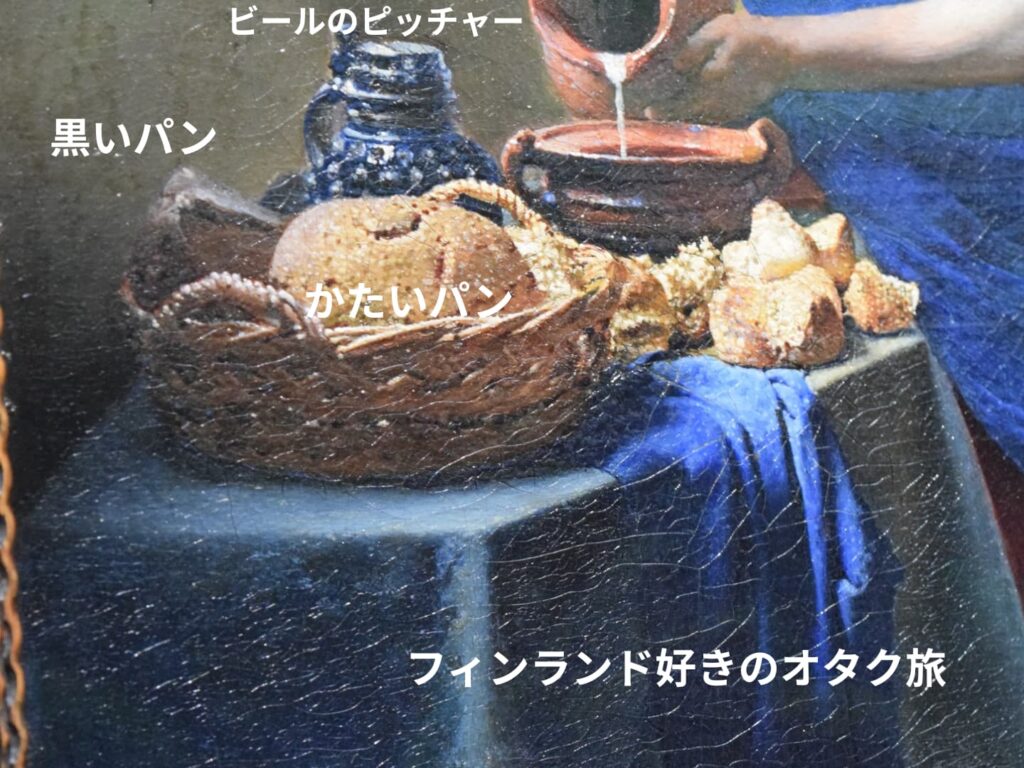
The pottery on the table isn’t the expensive porcelain of the elite; it’s sturdy, everyday earthenware—the kind of practical hardware that supported daily life long before the age of IKEA or modern big-box stores.
Hard Bread and Beer? The blue pitcher on the left likely held beer. Back then, beer was often safer to drink than the local water. The woman is pouring milk to simmer pieces of stale, rock-hard bread.
This reminded me of the dried bread I’ve encountered in Finland. It’s the kind of bread where you risk breaking a tooth if you aren’t careful! It sacrifices texture for long-term preservation—a true symbol of 17th-century resourcefulness.

Lastly, look at the blue of her apron. This is the famous Vermeer Blue, made from crushed lapis lazuli. (Side note: My wife loves Vermeer so much she recently bought a piece of lapis lazuli. Fun fact for my Japanese readers: lapis was recently discovered in Itoigawa, Japan!)
2. Woman in Blue Reading a Letter (ca. 1663–1664)

My first impression? It’s dark. It makes you realize how much we rely on artificial light today. This painting captures that quiet, blue-tinted atmosphere of a room before the midday sun hits.
The composition is incredibly focused, using a simple palette of blue, yellow, and white. The woman is intensely focused on her letter.
During this era, the Reformation led to a massive spike in literacy rates in the Netherlands, as people were encouraged to read the Bible for themselves. This spike in literacy turned “reading” into a popular subject for art—much like the townspeople of Edo-period Japan, whose high literacy rates fueled a massive explosion in publishing and art.
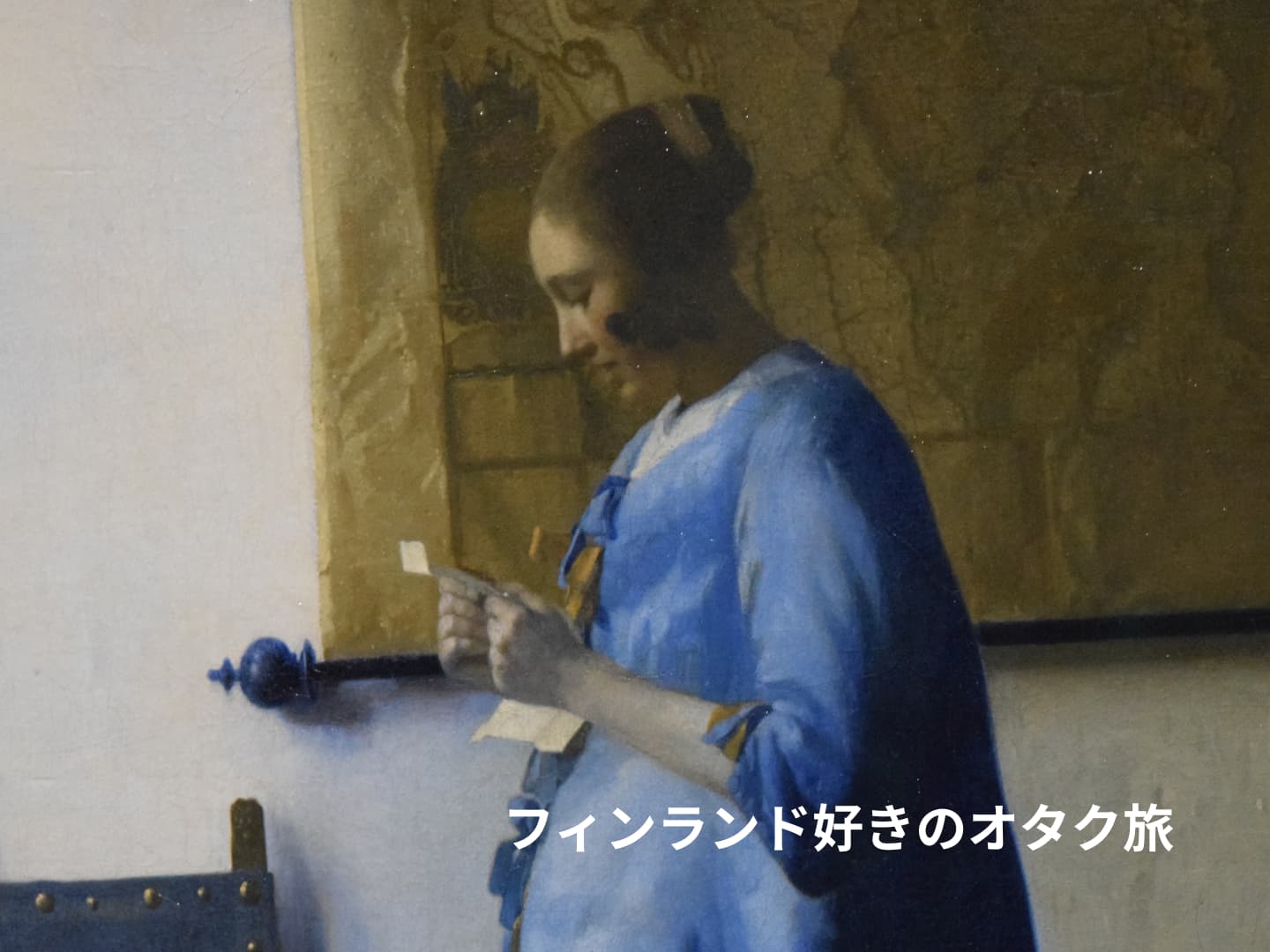
The Mystery of the Shadow One thing that really bothered me in person: the woman’s cheek. There’s a shadow there so dark it looks like a drop of Sumi (Japanese black ink). It felt too intense to be just a shadow. Is it a result of centuries of aging, or was Vermeer making a bold statement about contrast? What do you think?
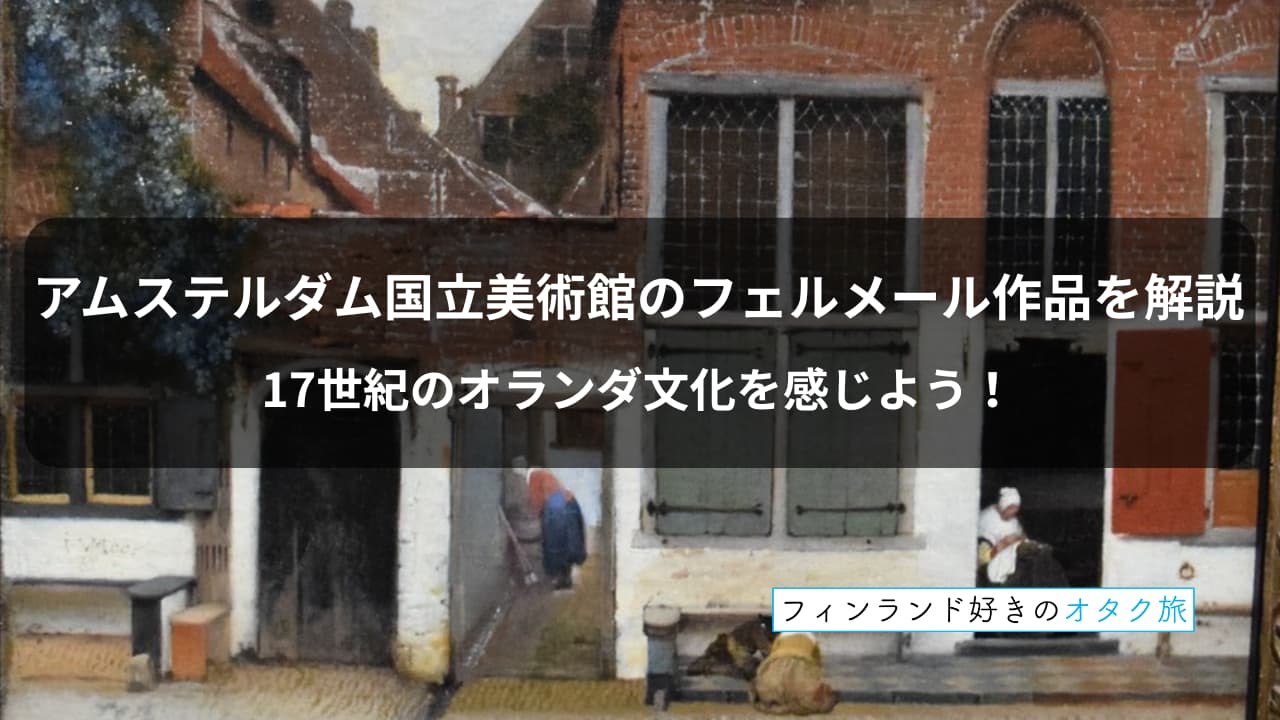
3. The Little Street (ca. 1657–1658)
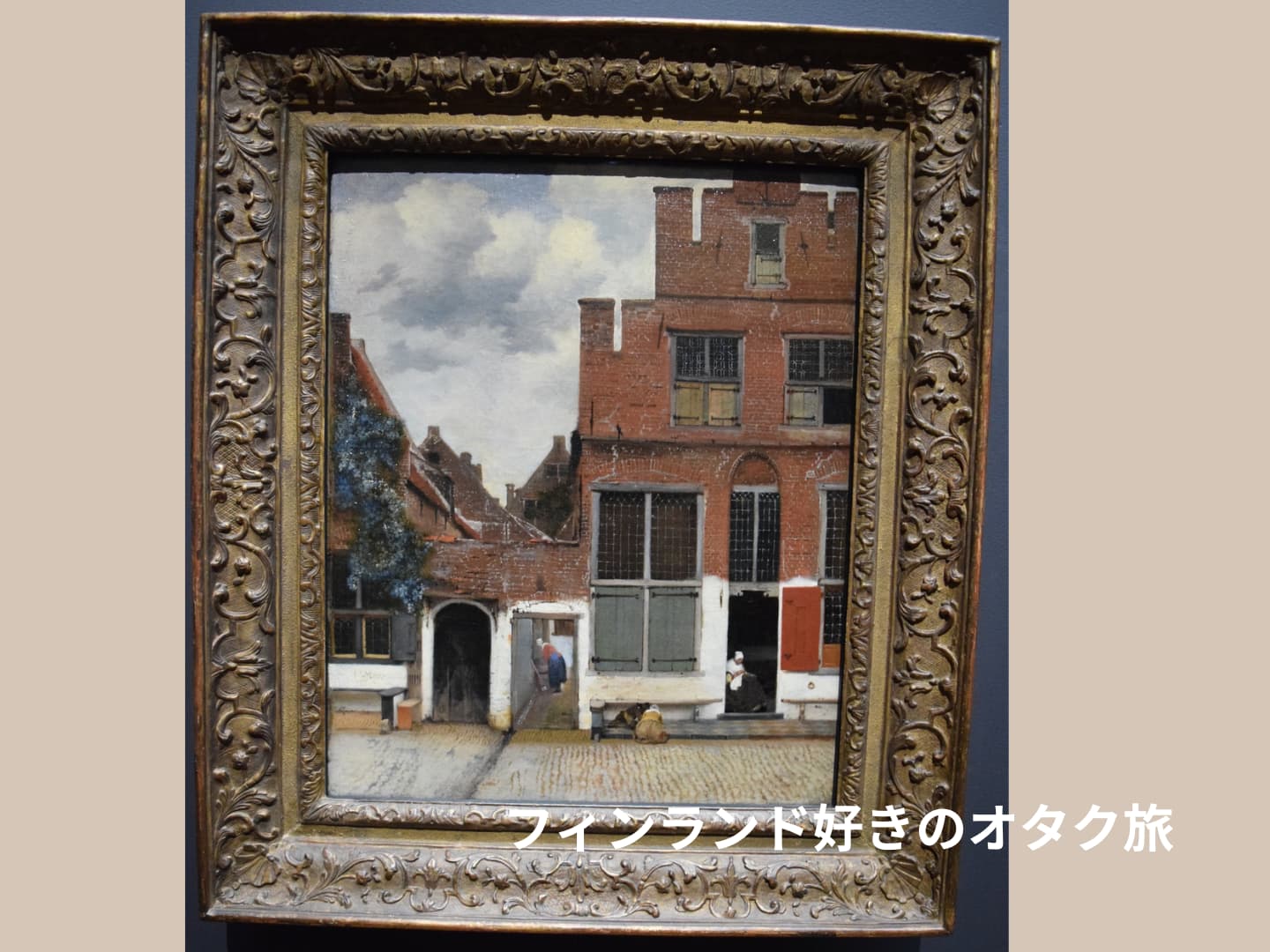
This is one of only two landscapes Vermeer ever painted.
Look at the building on the right. It looks older and more grand—almost castle-like—compared to the others. Much of Delft was rebuilt after a massive gunpowder explosion in 1654, so this “old house” likely evoked a sense of nostalgia for the people of that time.
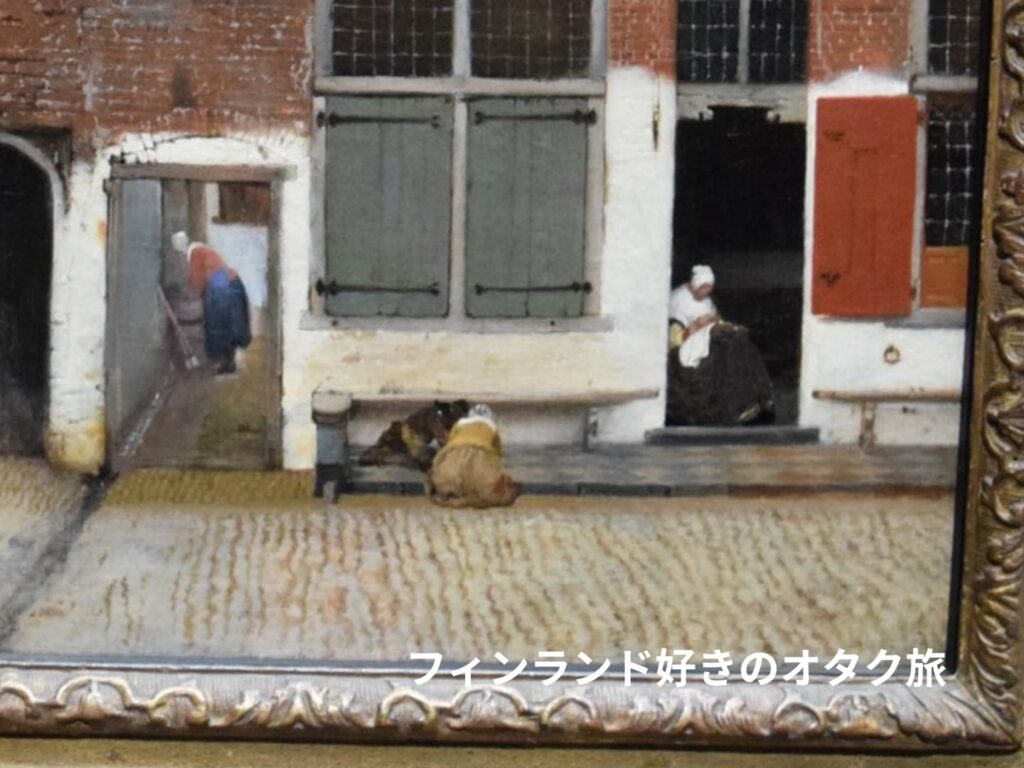
But this isn’t just a painting of a street; it’s a study of cleanliness.
The lower parts of the brick walls are painted white with lime wash for disinfection. Influenced by Calvinism, 17th-century Dutch society was obsessed with tidiness. Leaving your home dirty was considered a sin.
This reminded me of Edo Japan, where apprentices were expected to sweep the streets in front of their shops every single morning. It’s fascinating that two completely different cultures shared this “Spirit of Cleanliness.” (Sadly, modern Amsterdam, with its litter-filled streets, seems to have lost a bit of that Vermeer-era magic.)
Final Thoughts
I originally went to the Netherlands because my wife nudged me to go, but seeing these originals was a profound experience.
People say Vermeer was “forgotten,” but records show his paintings always fetched high prices. Looking at them now, I feel they’ve been loved by someone in every era. They possess a “sparkle” that no photograph can ever truly capture.
References
- 『フェルメール論 増補新装版: 神話解体の試み』小林頼子著 八坂出版 2008
- 『フェルメールへの招待』朝日新聞出版 2012
- “Netherlands” Sage Publishing (https://sk.sagepub.com/ency/edvol/consumption-waste/chpt/netherlands#_)2025.3.19アクセス
- “Limewash: An Old Practice and a Good One” National Park Service(https://www.nps.gov/articles/limewash-an-old-practice-and-a-good-one.htm)2025.3.19アクセス
- “The Little Street” Rijksmuseum.nl(https://www.rijksmuseum.nl/en/collection/object/View-of-Houses-in-Delft-Known-as-The-Little-Street–a7dbf937cbd6f7c30f66f8aca4a0207c)2025.3.19アクセス
コメント