Hello, I’m Zukky.
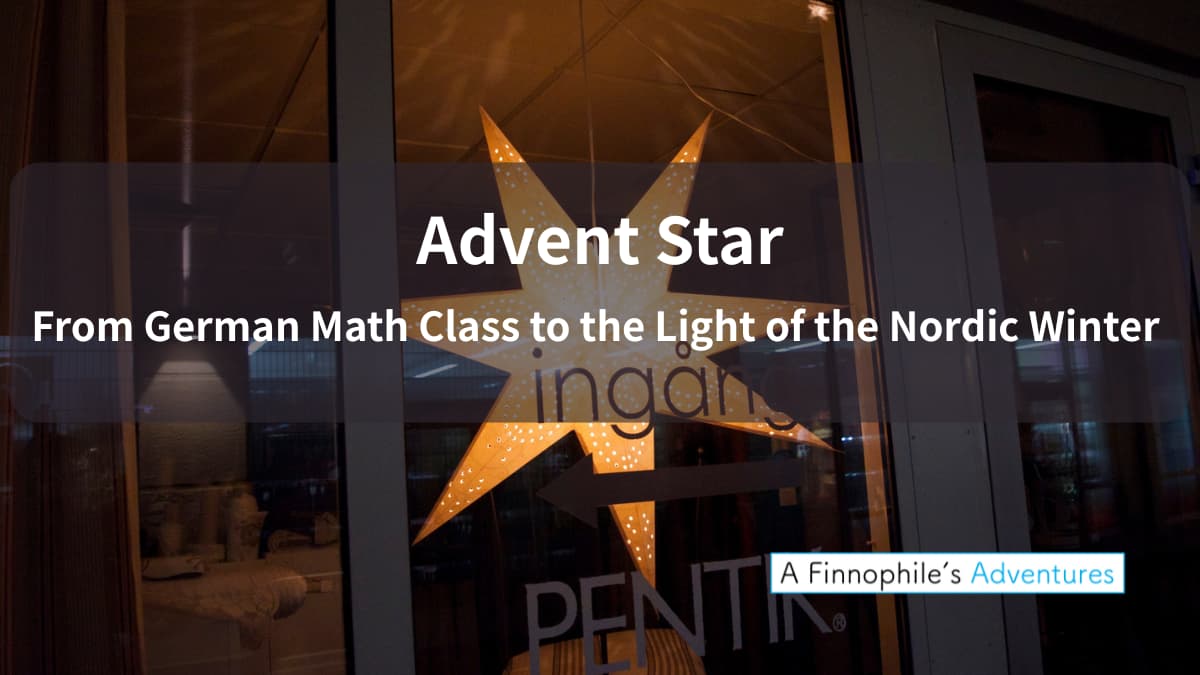
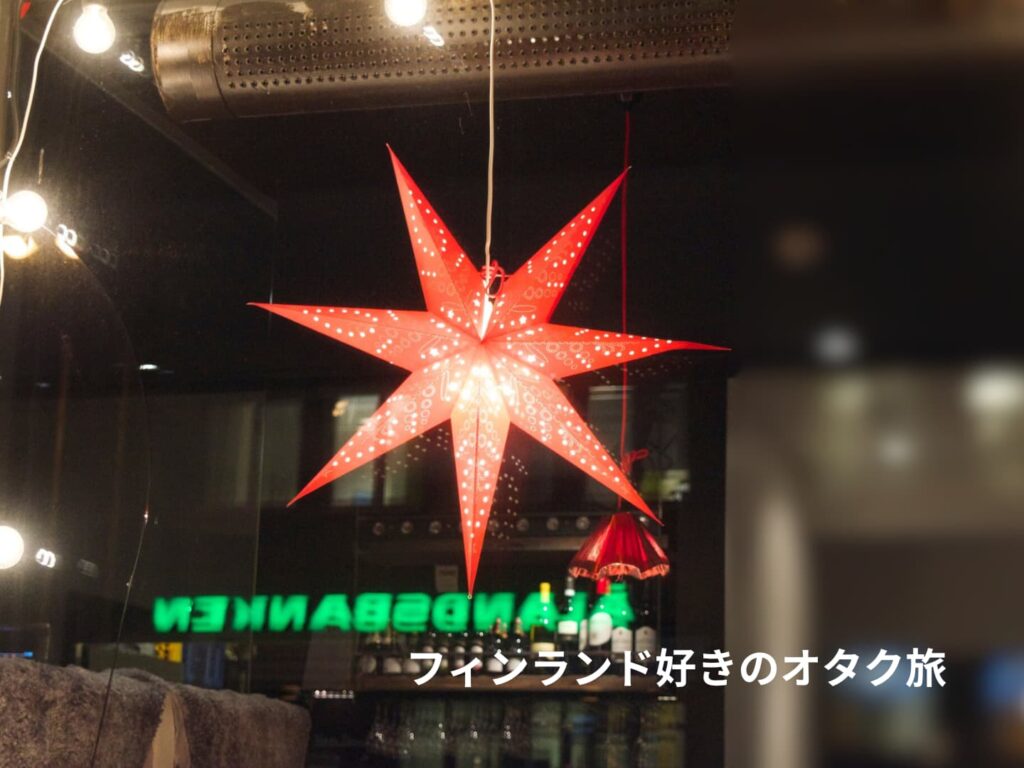
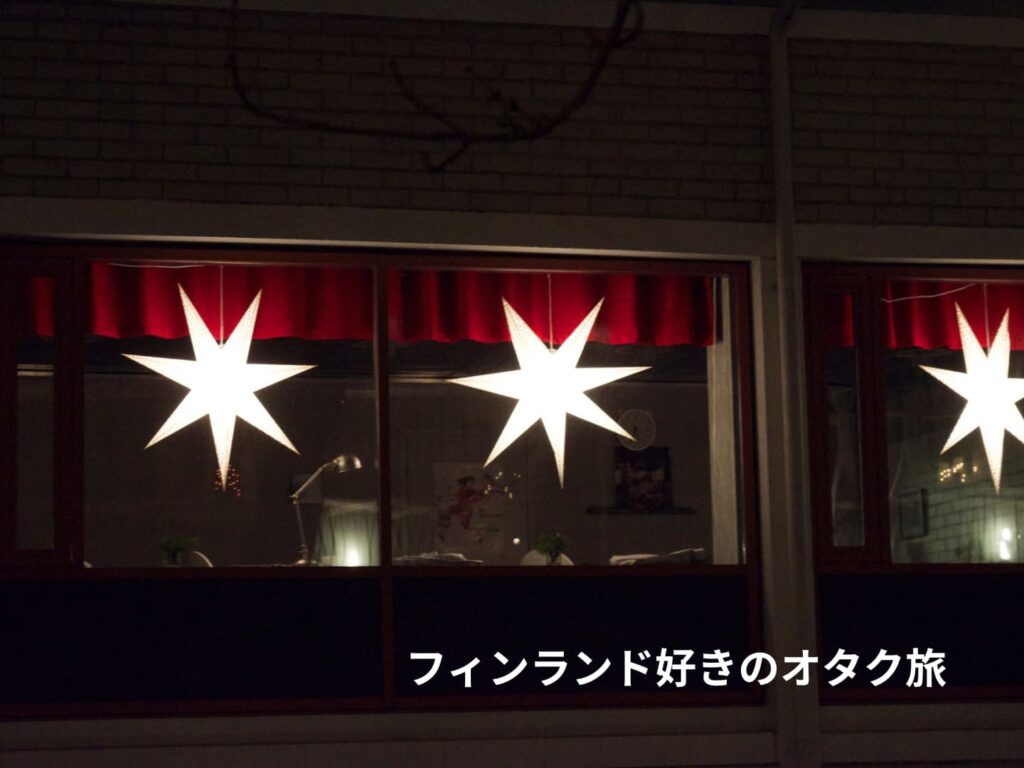
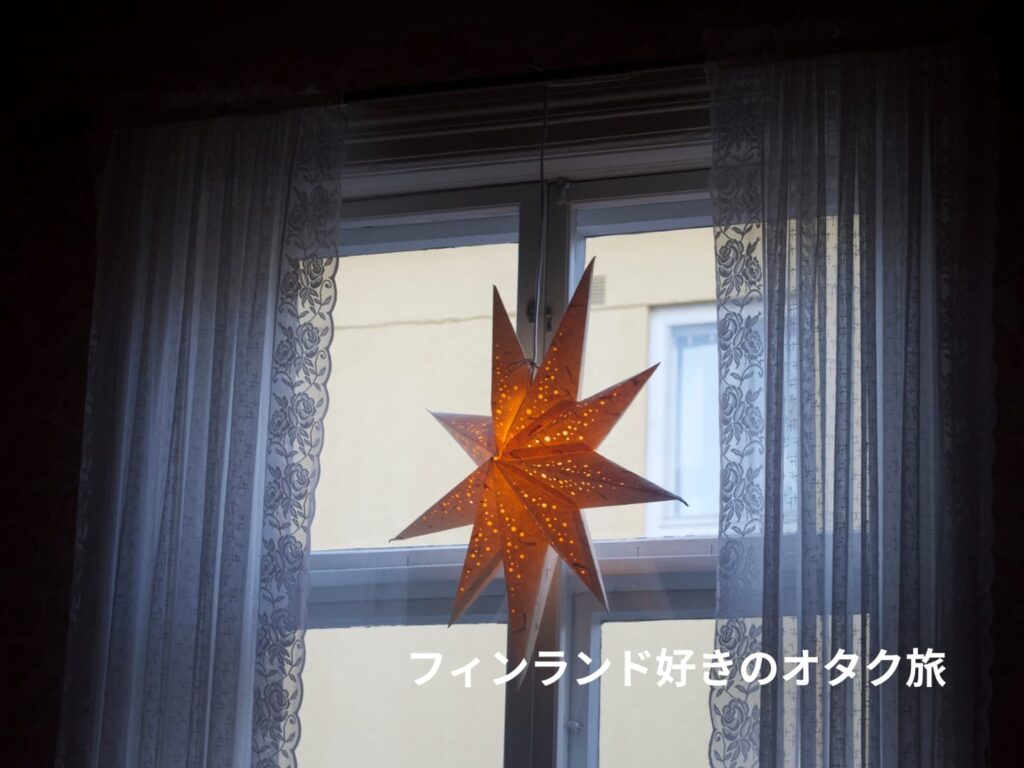
One Christmas when I was walking through the streets of Finland, I noticed beautiful star decorations hanging in the windows of people’s homes.
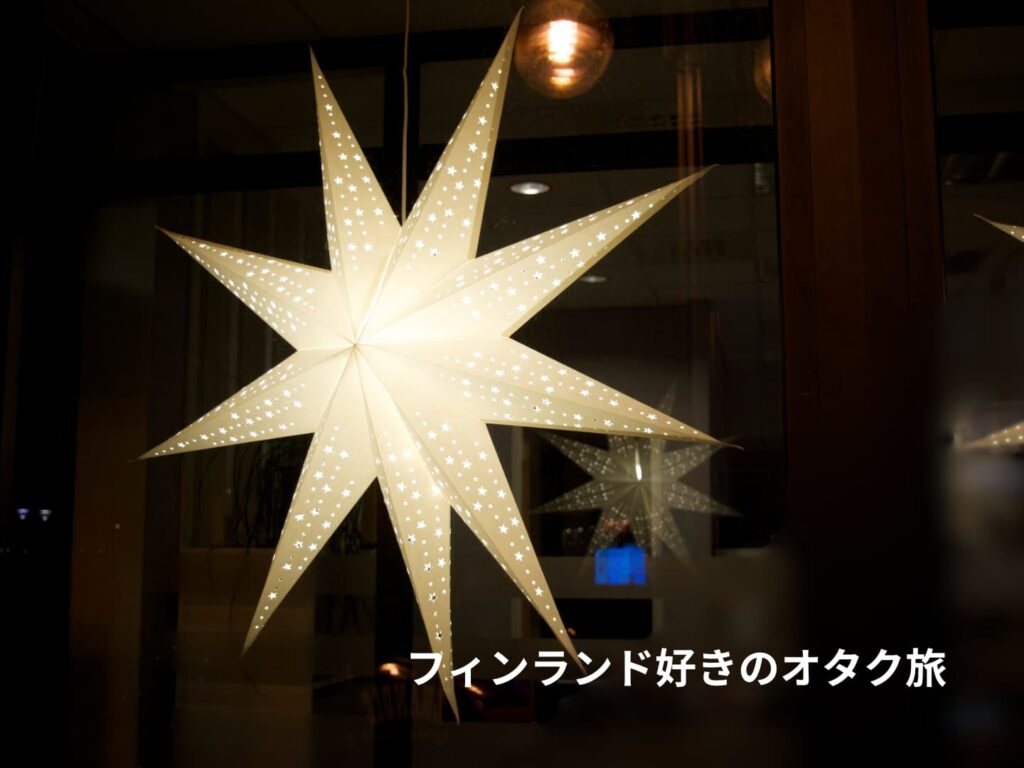
I was naturally drawn to them and started taking photos of every single one I saw. The shapes of the stars differed from building to building, and I enjoyed seeing what kind of designs were being displayed. My friend, who was with me, didn’t show the slightest interest, so I diligently photographed the stars alone, completely ignoring him.
Although these decorations are seen in Japan now, they were not common back then.
Since I was so fascinated by these star decorations, I decided to look into them. It turns out that this ornament is called “Adventti tähti” in Finnish and “Julstjärna” in Swedish. Its origin dates back to a custom in 19th-century Germany.
Let’s take a closer look!
Basic Information
What is the name of this star ornament?

In Finland, it is called Adventti tähti (meaning “Advent Star”) in Finnish, or Julstjärna (meaning “Christmas Star”) in Swedish. “Advent” means the “coming of Christ.”
Christmas is the day celebrated as the birth of Christ. The four Sundays immediately preceding Christmas are called the First Sunday of Advent, the Second Sunday of Advent, and so on.
In Germany and Austria, the lighting of the Christmas tree is traditionally held on the Saturday before the First Sunday of Advent, or sometimes the Friday before that.
In simple terms, Advent refers to the exciting waiting period leading up to Christmas. In English, the decoration is often simply called the Advent Star.
In Germany, where this star ornament originated, it is known as the Moravian Star or Herrnhuter Stern.
So, why are these star decorations displayed at Christmas? It is because the star is a symbol of Christ.
The Star’s Meaning in Christianity: The Star of Bethlehem
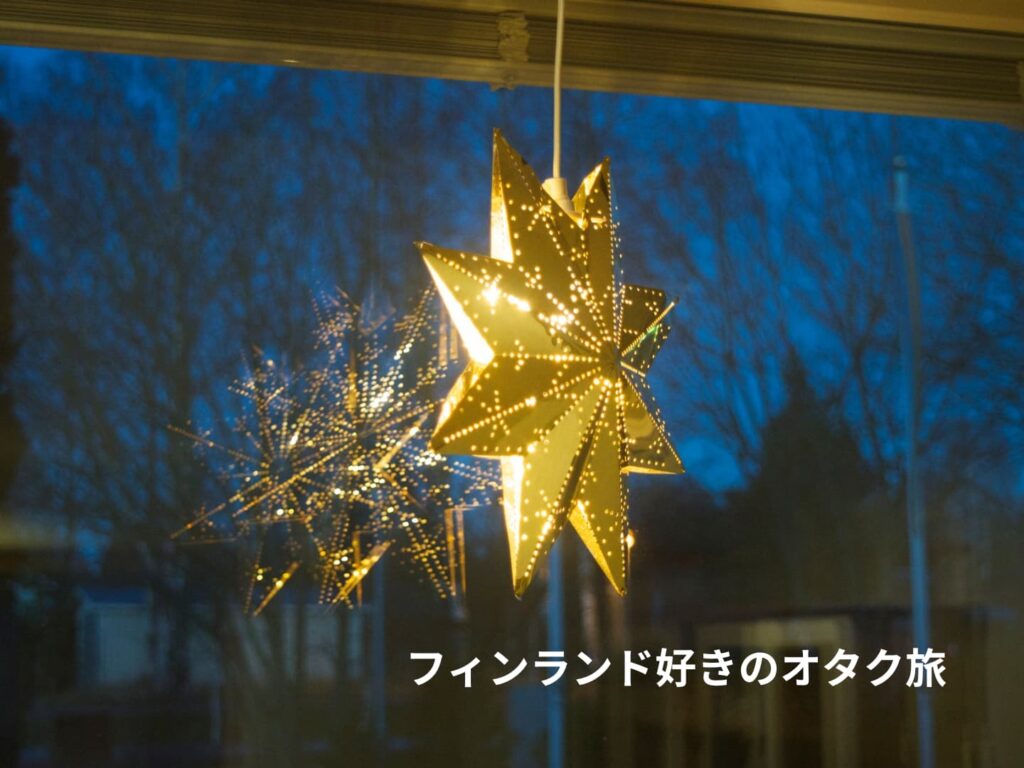
The star is considered a symbol of Christ because His birth into the world was seemingly blessed by a celestial sign.
In the Gospel of Matthew in the New Testament, there is a story about the Magi (Three Wise Men from the East) who were led by a star to the cave in Bethlehem (now in the Palestinian Authority) where Christ had just been born. It is believed that a comet actually appeared over Bethlehem around 5 BCE, the likely time of Christ’s birth.
This event is the reason the Star of Bethlehem became a symbol of Christ.
Therefore, decorations modeled after the Star of Bethlehem are displayed during Christmas to celebrate Christ’s birth. The star placed at the very top of the Christmas tree also imitates this. It perfectly aligns with Christ as the “Light of the World.”
How long are the stars displayed?
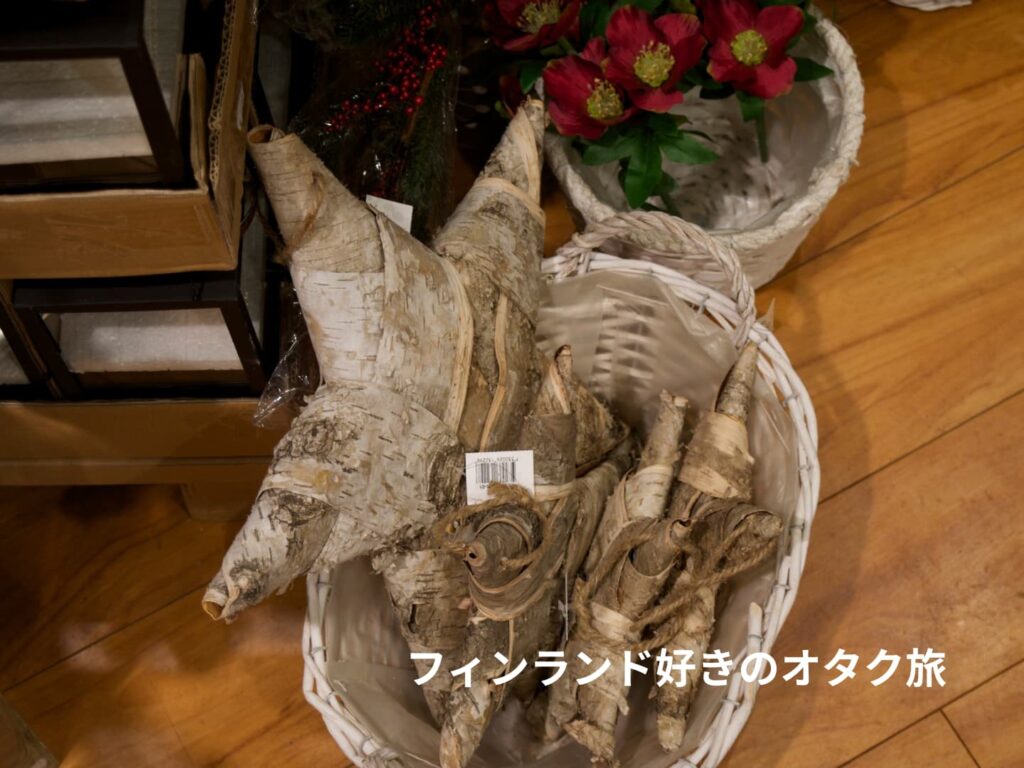
Traditionally, the Advent Star is displayed from the First Sunday of Advent until Epiphany (January 6th), the day the Wise Men paid homage to Christ.
History of Origin: How Did a German Church Custom Spread to the Nordics?
The Origin of the Star Ornament
The star decoration was born in the mid-19th century at a boarding school belonging to the Moravian Church in Germany.
At that time, the Moravian Church sent missionaries across Africa, Asia, America, and Europe. To ensure their children received a high level of education, missionaries would send them back to Germany upon reaching a certain age to enroll them in the church’s boarding schools.
One day, at the boarding school in Herrnhuter, Germany, students were instructed to make stars in a math (geometry) class to better understand the subject, and the finished stars were hung in the classroom. These stars, symbolizing Christ and biblical stories, were intended to help the children overcome their loneliness from being away from their families during Christmas. This activity evolved into the custom of taking the stars home and displaying them during the holidays.
Isn’t it fascinating that the origin of this decoration lies in a math class?
This star ornament is known as the Moravian Star, named after the church. Unlike the Advent Stars seen in the Nordics, the Moravian Star is pointy, resembling a sea urchin.
From Germany to the Nordics
It is unclear exactly how this star decoration spread to the Nordic countries.
What is certain is that the star decoration (Julstjärna) began to be displayed in Sweden starting in 1923, and gradually became widespread in the 1930s. It is believed that the star was adopted in the Nordic countries, where days are extremely short in winter, to bring light into homes. Finland likely adopted the custom shortly after Sweden.
This custom’s spread was likely influenced by the fact that the cultural foundation for celebrating Christmas with candlelight was already established in Sweden by the St. Lucia’s Day Festival, which began in the 18th to 19th century. The Lucia Festival, celebrated on December 13th, involves girls wearing white gowns and crowns adorned with lit candles. The root of “Lucia” is lux, which means “light” in Latin. In essence, the festival involves girls lighting candles during the darkest time of winter to bring a light of hope.
Therefore, the star ornament was accepted not merely as a symbol of Christ, but as a cultural tool that extended the light of the Lucia Festival, inviting warmth and illumination into the home.
I believe that, compared to the original German custom which was strongly religious, the Nordic adoption of the star is more centered on the cultural element of brightly lighting up the dark winter.
Star Designs and Modern Adaptation
Materials and Designs
Traditionally, the stars are colored red (representing the blood of Christ) and white (representing purity).
Materials include paper, wood, glass, and plastic. I personally love the paper ones.
Today, you can purchase them at IKEA, Nordic specialty stores, and online retailers.
(I want one so badly, but I don’t have space to display it yet. I make do by admiring them in other people’s homes!)
You can also make paper Advent Stars by hand, which is a great activity to do with children. (You can even make the Moravian Star design from PDF papercraft files.)
Enjoying the Stars While Traveling
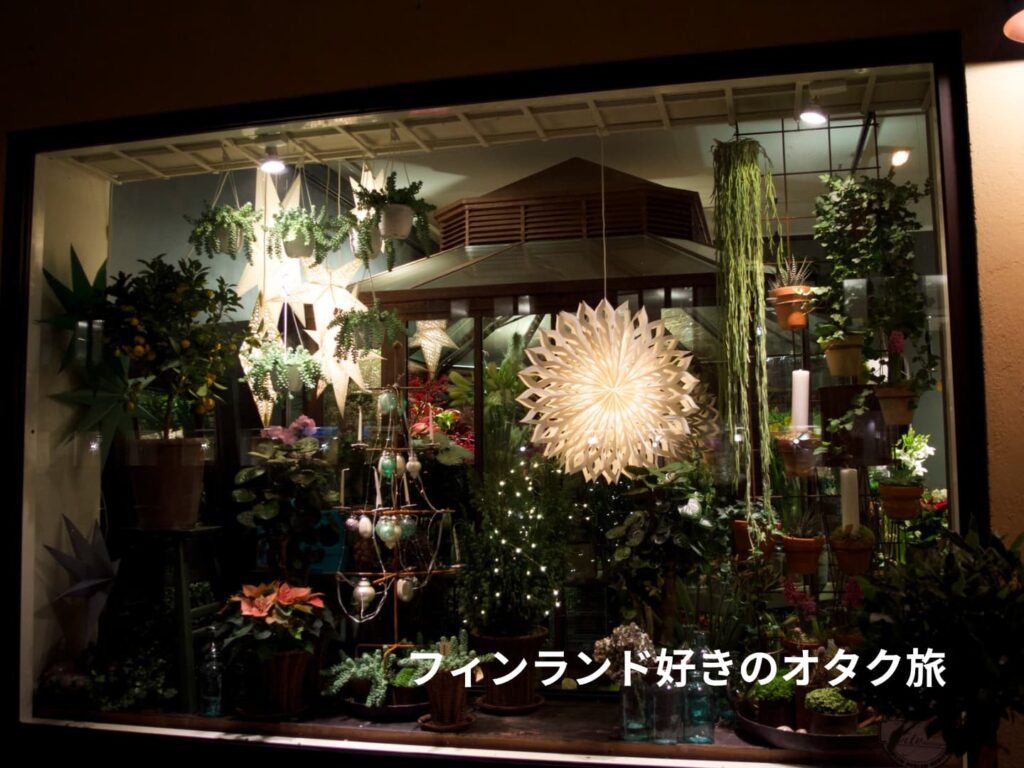
In the cities of Finland and Sweden, when Christmas markets open in December, these star decorations are beautifully displayed in the windows of homes and shop displays.

It’s truly enjoyable to see the different designs from house to house and store to store.
If you are there, you can find them sold in department stores like Stockmann in Helsinki, so be sure to look for one!
Conclusion
The Star of Hope: Where Christian Symbolism Meets Nordic Culture
Through this article, we hope you’ve gained a deeper understanding of the meaning behind the “Advent Star” shining in Nordic windows.
This star ornament, symbolizing the Star of Bethlehem, was born as a geometry lesson in a German boarding school in the mid-19th century.
It then became widely popular in the Nordic countries, where it was accepted not merely as a religious ornament, but as a cultural tool that met the deep “thirst for light” cultivated by the St. Lucia’s Day Festival during the extremely dark winter.
If you have the chance to visit the streets of Finland or Sweden in December, take a moment to feel the dual meaning the star possesses: the “Light of Christ” and the “Warmth of Winter.”
This beautiful light is the crystallization of Nordic wisdom and tradition for inviting hope into the home.
References
- Herrnhuter Sterne “History of the origins” (https://www.herrnhuter-sterne.de/en/Entstehungsgeschichte.html)2025.12.10アクセス
- 『クリスマスの文化史《新装版》』若林ひとみ著 2010 白水社
- swedishfood.com “Advent in Sweden”(https://www.swedishfood.com/advent)2025.12.10アクセス
- 『よくわかるクリスマス』嶺重淑・波部雄一郎著 2014 教文館


コメント