Hi, I’m Zukky.
The Sámi are the only indigenous people of Europe, living in a region called Sápmi that spans four countries: Norway, Sweden, Finland, and Russia.
Traditionally, the Sámi lived by reindeer herding, fishing, hunting, and gathering. However, due to external factors, it has become difficult to maintain the traditional way of life, and today, reindeer herding is perhaps the only practice that relatively preserves its traditions.
Nevertheless, in recent years, there has been a growing interest in the Sámi’s original food culture of coexistence with nature, driven by the revival of Sámi culture and the perspective of sustainable living. As it is one of the roots of Nordic cuisine, it is a food culture that Nordic enthusiasts should definitely know about.
- The Foundation and Diversity of Sámi Food Culture
- Main Ingredients Used in Sámi Cuisine
- Representative Sámi Dishes (Reindeer)
- Representative Sámi Dishes (Other than Reindeer)
- Modern Sámi Cuisine and the Re-evaluation Movement
- The Boundary with Finnish Cuisine: Where Does “Sámi Food” Begin?
- Sámi/Lapland Restaurants for Travelers
- Zukky’s Food Culture Summation (The Punchline)
- Sámi Culture: Related Articles
- References
The Foundation and Diversity of Sámi Food Culture
The Sámi originally recognized eight seasons in their calendar.
Since the Sámi traditionally moved their living locations according to the season, the available food sources differed based on where they were. Furthermore, their lifestyles varied depending on the region they inhabited, suggesting that distinct food cultures existed (e.g., Mountain Sámi vs. Coastal Sámi).
However, the Sámi cuisine widely known is limited, and information available in Japan is scarce. Here, I would like to introduce as many Sámi dishes and foods as possible.
Sámi dishes, centered on reindeer herding, fishing, hunting, and gathering, are often very simple. Reindeer, in particular, has been the mainstay of traditional Sámi culture, leading to many representative dishes and foods.
Let’s start by looking at the ingredients.
Main Ingredients Used in Sámi Cuisine
| Category | Ingredient | Main Uses |
| Meats | Reindeer Meat | Soup, Sauté, Dried Meat (Goikebiergu), Smoked Meat (Suovas), Blood and Bone Marrow |
| Moose Meat | Important hunting meat; used in stews, etc. | |
| Grouse Meat | Wild animal hunted for food. | |
| Fish | Salmon Cods | For preservation: dried, salted, smoked. Also used in soups and oven dishes. |
| Arctic Char | Once a staple, now a symbolic, high-end ingredient. | |
| Vegetation | Cloudberry | Essential source of vitamins; eaten fresh, in jams, and desserts. |
| Lingonberry | Used as a side dish for meat, or in jams. | |
| Angelica Lichens | Used as herbs. Also consumed as emergency food or for thickening/bulking bread. |
There are significant regional differences in Sámi ingredients. Inland Sámi primarily relied on reindeer meat and freshwater fish, while Coastal Sámi consumed more seafood like cod and salmon.
Furthermore, reindeer meat, for which every part is utilized, is not merely food but a symbol of Sámi culture and economy. The philosophy of utilizing everything, including blood and bone marrow, is being re-evaluated today from the perspective of sustainability.
Representative Sámi Dishes (Reindeer)
Reindeer Meat Stew (Bidus)
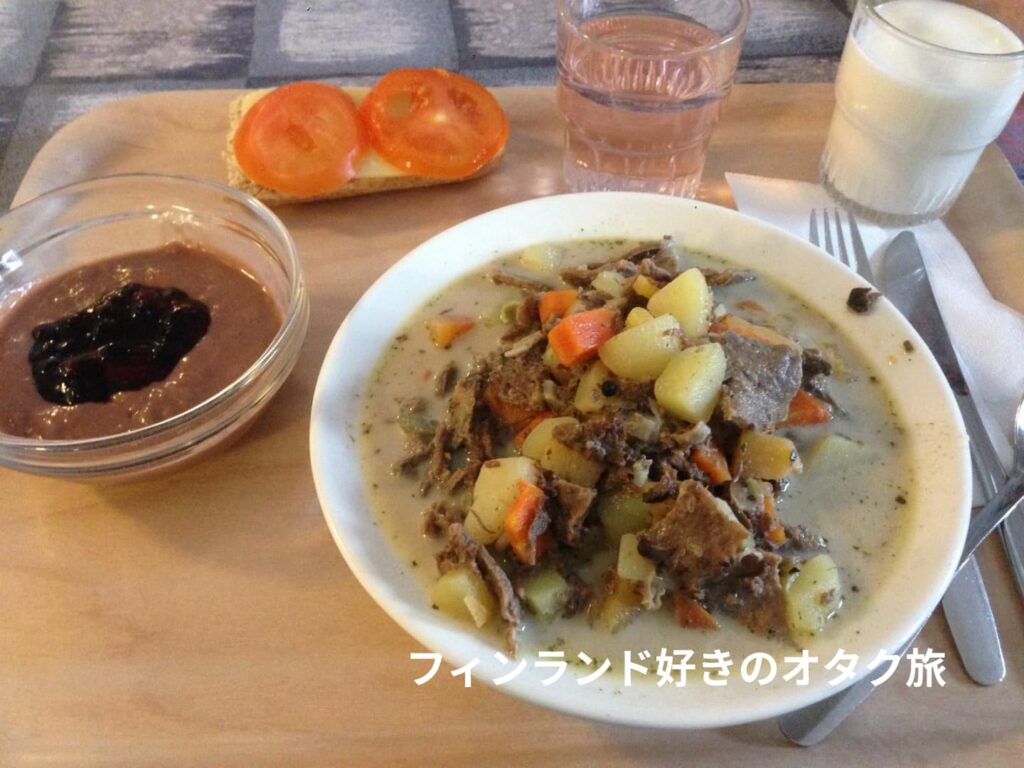
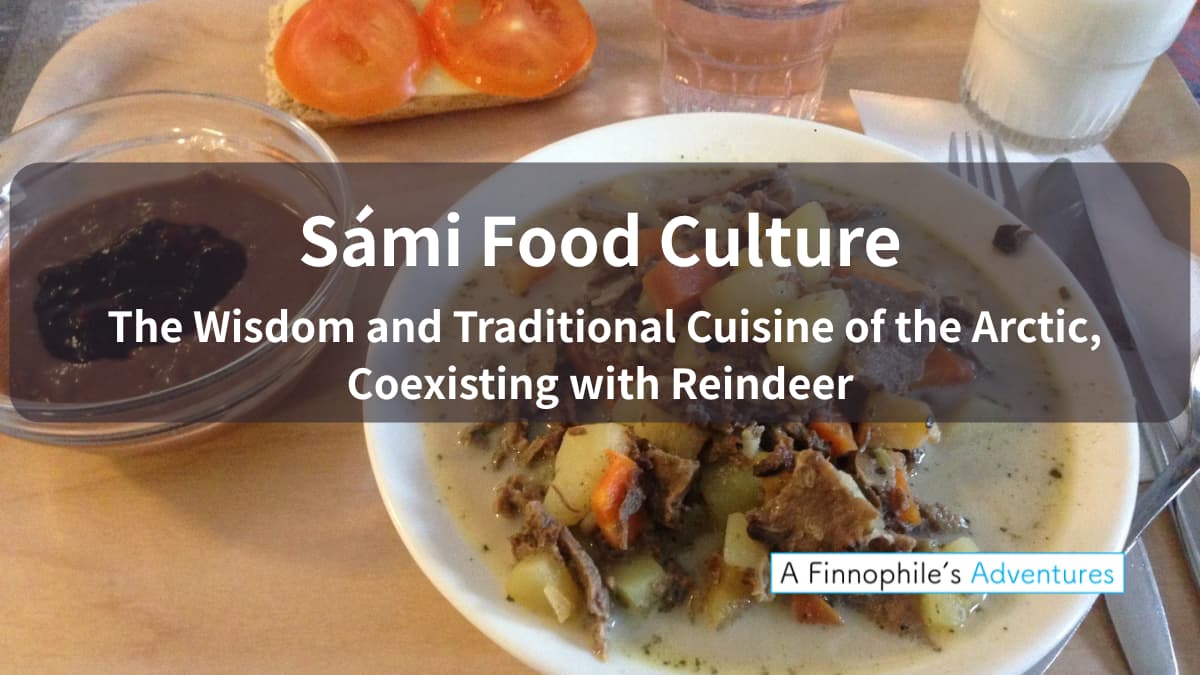
This is a stew made by simmering reindeer meat with potatoes, carrots, and onions, seasoned with salt. According to “World Food Cultures: The Arctic“, families that herd reindeer often use meat still on the bone (back or rib meat). It is traditionally eaten by scraping the meat off the bone with a knife.

As a student, I greedily devoured the reindeer soup served at the research facility. In my mind, it holds a position comparable to Sushi in Japan!
Reindeer Dried Meat
Dried Meat (Goikebiergu)
This traditional dried meat is consumed during the spring and summer when fresh meat cannot be easily preserved. It is prepared by salting and drying reindeer meat in the cool early spring air.
I bought this at supermarkets in Lapland (Sevettijärvi and Inari) and ate it. It’s a bit salty and has a distinct gamey scent, but I actually really like it. The meat color is dark and looks a little suspicious, but it’s perfectly fine!
Smoked Dried Meat (Suovas)
This is reindeer meat that has been salted and lightly cold-smoked. It is said to be delicious when grilled or roasted.
Reindeer Bone Marrow
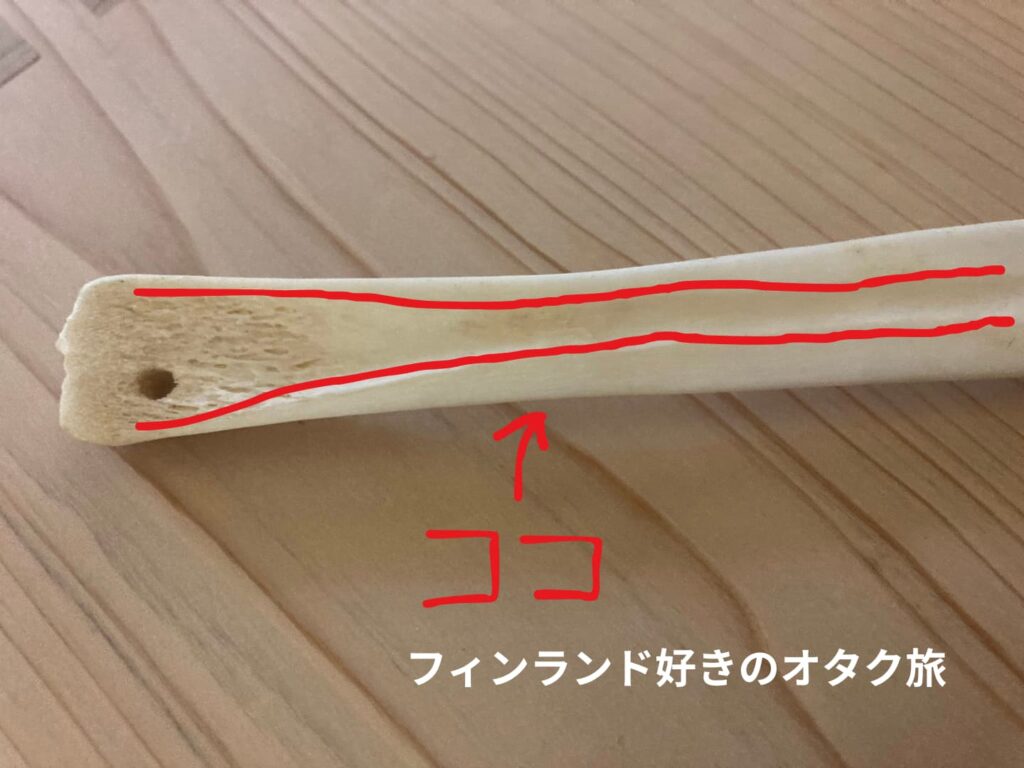
When researching Sámi food, the topic of reindeer bone marrow always comes up. Sámi people believe that reindeer bone marrow is good for the eyes, which is useful for discerning the ear marks of their reindeer.
Bone marrow, being the part that produces blood, is highly nutritious, similar to blood. It is said to have a smooth, rich texture, like the marrow of a bird’s drumstick, and is supposedly milder and tastier than blood.
Unfortunately, I have only experienced sucking the marrow out of chicken drumsticks; I haven’t had the chance to try reindeer bone marrow.
Reindeer Blood Pancakes (Varra bánnnogáhkut)
This is another dish that inevitably appears when researching Sámi food. It is made by mixing reindeer blood with flour, etc. A similar item is reindeer blood dumplings, which are made as a preserved food.
There is a BBC Earth video showing someone eating the blood pancake; the reporter says they expected a stronger taste, but the flavor was milder than anticipated.
Reindeer Sausages
Reindeer Meat Sausage (Gurpi)
This is a type of sausage made by salting reindeer minced meat, stuffing it into reindeer tripe (stomach), and cold-smoking it.
That looks genuinely delicious!
Blood Sausage (Márffit)
This is made by stuffing reindeer intestines with a mixture of reindeer blood, flour, and spices. (I am sharing the post from an Instagram account introducing Sámi cuisine).
Reindeer Milk
People who herd reindeer sometimes collect the milk and process it into cheese. Since only a small amount can be collected compared to dairy cows, it rarely appears on the market.
In Finland and other Nordic countries, coffee is sometimes consumed with cheese inside; it is said that this tradition originated from the Sámi custom of drinking coffee with reindeer cheese.
Representative Sámi Dishes (Other than Reindeer)
Fish Consumption
In addition to reindeer, fish from lakes and rivers, such as:
- Arctic Char (Salmon family)
- Northern Pike (Pike family)
- Whitefish (🇫🇮 siika, Salmon family)
have been utilized, often smoked or salted. I’m not sure if I should strictly call it “Sámi cuisine,” but the smoked whitefish sold in Inari is exceptionally delicious.
As for sea fish, the Sámi also consumed:
- Salmon family fish
- Cod family fish
- Herring/Mackerel
Fish is prepared by grilling over an open fire, pan-frying in butter, thinly salting the fillets, or by deep-frying or baking with potatoes, or making it into soup.
Other: Berries, Mushrooms, etc.
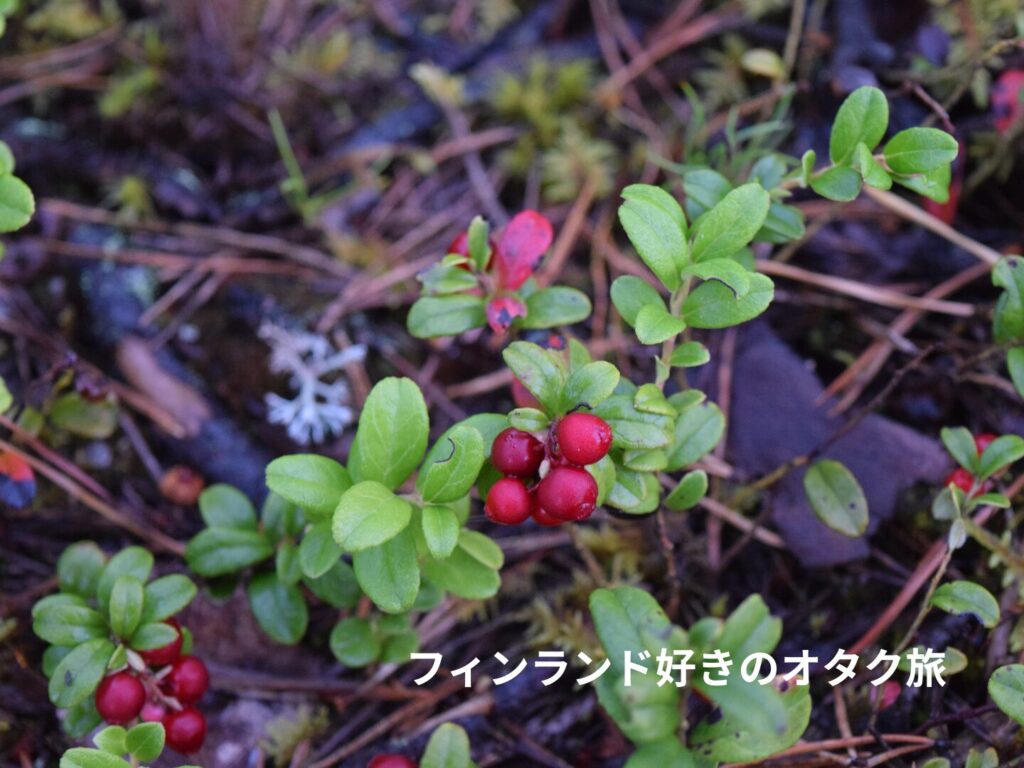
Berries are often used as side dishes for meat, fish, and cheese. Lingonberry jam is the most common accompaniment. Cloudberries are also used. Bilberries and Crowberries are often made into sweetened juice by diluting a sugar preserve with water.
Similar to Alaska, berries are a crucial source of vitamins for people in the North.
Furthermore, mushrooms, lichens, and tree bark (for bulking up bread, etc.) were also consumed.
In the resource-scarce Lapland environment, everything obtained from nature was fundamentally used without waste.
Modern Sámi Cuisine and the Re-evaluation Movement
Today, Sámi people do not exclusively eat traditional foods.
The reality is that, in the process of raising reindeer, if you place traditional reindeer dishes next to microwave-heated frozen pizza and hamburgers, and homemade berry juice next to Coke or Pepsi, the majority of children will choose the latter. Furthermore, there is a definite increase in young people using pepper to mask the distinctive scent of reindeer meat.
From: World Food Cultures: The Arctic, supervised by Naomichi Ishige, 2005, Nōbunkkyō
As modern dining evolves in this way, the traditional Sámi food culture is being re-evaluated.
In 2004, “Slow Food Sápmi” was established, leading to a movement to rediscover Sámi food culture as a sustainableform of cuisine. This influence is also incorporated into the New Nordic Cuisine, resulting in modern arrangements that utilize traditional ingredients. Restaurants in Finland are also emerging that create Finnish dishes using local ingredients.
The Boundary with Finnish Cuisine: Where Does “Sámi Food” Begin?
Given this trend, the boundary between Sámi cuisine and Finnish cuisine becomes ambiguous.
For instance, reindeer soup (🇫🇮: Porokeitto) and sautéed reindeer (🇫🇮: Poronkäristys) are common among Finns. Although the reindeer originated from the Sámi tradition, reindeer meat is readily available in Finnish supermarkets.
Many establishments also serve “Lapland food” or “Arctic cuisine,” which sit somewhere between Sámi and Finnish cuisine.
Ultimately, I believe the defining criterion is not the content of the dish or the ingredients, but whether the food is offered alongside a Sámi cultural experience.
Sámi/Lapland Restaurants for Travelers
If you wish to eat genuinely pure Sámi food, you might have to opt for a homestay.
However, dishes rooted in Sámi cuisine can be easily enjoyed at restaurants. Be aware, though, that reindeer dishes and local ingredient cuisine are generally branded and expensive. Be prepared to loosen your purse strings quite a bit! (lol)
| 国 | 都市 | レストラン名 | コメント |
| Finland | Rovaniemi | Restaurant Nili | Rich in reindeer and game meat. Focused on local ingredients. |
| Inari | Restaurant Aanaar | Located on the shore of Lake Inari. Sophisticated dishes using freshwater fish and local ingredients. | |
| Levi | Saamen Kammi | Dining in a traditional Sámi hut (gamme). Focus on cultural experience. | |
| NiliPoro | Run by reindeer herders. Reindeer meat is the main focus. | ||
| Norway | Alta | Sámi Shida | Attached to a Sámi cultural experience center. Serves traditional dishes like Bidus. |
| Sweden | Jukkasjärvi | Ovttas | Sámi culture Modern dishes featuring Arctic Char and other local ingredients. |
Zukky’s Food Culture Summation (The Punchline)
How was it?
Ultimately, traditional Sámi food is filled with the philosophy of coexisting with nature and honoring life by utilizing it without waste, a wisdom that modern people often forget.
…That being said, I have to be honest.
While reindeer blood pancakes and rich bone marrow, the crystallization of survival wisdom in a harsh environment, are wonderful, for an ordinary person like me, the greatest joy might be devouring salty, gamey dried meat (Goikebiergu) bought easily at a Lapland supermarket, while sipping a Coke!
Tradition is important! But hamburgers and French fries are delicious, too!
Putting the complicated things aside, “delicious” is what truly defines Sámi food culture!
If you ever have the chance to encounter Sámi culture, I would be happy if you gave some thought and feeling to their food.
Well then, see you later! Heippa!
Sámi Culture: Related Articles
This is a comprehensive guide to Sámi history, culture, and life in the North. Click on a topic to dive deeper.
References
- 『世界の食文化 極北』石毛直道 監修 農文協 2005
- 『ラップランドの自然と人 リンネのフィールドノートから』塚田秀雄 訳著 2020 古今書院
- 『ノルウェーのサーメ学校に見る先住民族の文化伝承 ハットフェルダル・サーメ学校のユニークな教育』長谷川紀子著 2019 新評論
- 各項目のインスタグラムの紹介文
- Tervo, Hellevi et al. “The cultural meaning of Sámi language, costume, and food to the Sámi, from the perspective of well-being.” International journal of circumpolar health vol. 81,1 (2022): 2133349. doi:10.1080/22423982.2022.2133349
- Rautio, A.-M., Linkowski, W. A., & Östlund, L. (2023). “They Followed the Power of the Plant”: Historical Sami Harvest and Traditional Ecological Knowledge (Tek) of Angelica archangelica in Northern Fennoscandia. Journal of Ethnobiology, 36(3), 617-636. https://doi.org/10.2993/0278-0771-36.3.617 (Original work published 2016)
- Carrillo Ocampo, J. C. (2024). The Wild Arctic Char in Swedish Sápmi–from StapleIngredient to Nostalgic Food. In Dublin Gastronomy Symposium 2024–Food and Memory: Traces, Trauma and Tradition.
- Casi, C. (2020). Sami identity and traditional livelihood practices: From non-Indigenous to Indigenous food frameworks. In Food Security in the High North (pp. 121-136). Routledge.


コメント